

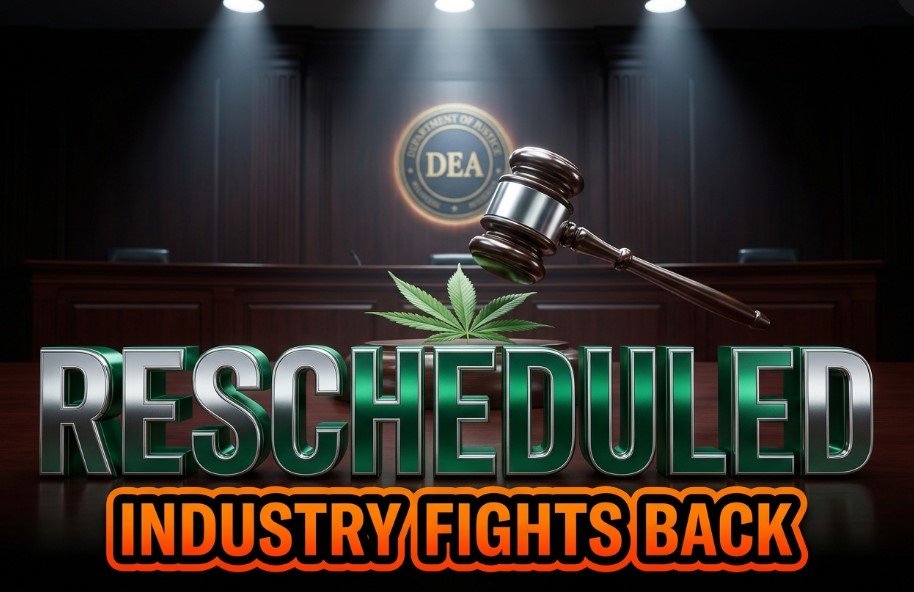
In 11 days, the cannabis industry walks into the most important government hearing it has ever faced. A DEA administrative hearing starting June 29 will determine whether marijuana’s federal status changes for good, or gets blocked before it fully takes hold.
What the April Rescheduling Order Really Changed
On April 23, 2026, Acting Attorney General Todd Blanche signed an order that shook the cannabis world. The order immediately moved FDA-approved marijuana products and state-licensed medical marijuana from Schedule I to Schedule III under the Controlled Substances Act, effective April 28. That makes it the biggest shift in federal drug policy in over 50 years. But here is the part that matters most for operators. The April order only covers state-licensed medical marijuana programs and FDA-approved products. Adult-use recreational cannabis still sits in Schedule I. For the operators running the bulk of this multi-billion-dollar industry, the toughest federal restrictions remain in place until the June 29 hearing changes that. Medical cannabis operators did get one major win right away. As of April 22, state-licensed medical operators are no longer bound by Section 280E of the Internal Revenue Code. That law had blocked cannabis businesses from deducting basic expenses like rent, payroll, and marketing for decades. For adult-use operators, that punishing tax burden remains fully in effect.
Why the Industry Has to Show Up and Fight
Michael Bronstein, president of the American Trade Association for Cannabis and Hemp (ATACH), is not satisfied with the gains already made. He is pushing hard for the June 29 hearing to go further, with a clear goal of ensuring adult-use cannabis also gets rescheduled to Schedule III. Bronstein calls the April 23 order “the most significant federal advancement in cannabis policy in over 50 years.” But he is direct about what it takes to protect and build on it. “Laws are changing. The decisions that are made now are things that could impact the industry for years to come,” he said. The DEA will announce on June 22 which groups have been selected to participate in the hearing. Whether ATACH makes the cut will be known that day. Getting a seat at the table is not just symbolic. It shapes the entire factual record that the government uses to make its final decision. Here is what operators stand to gain or lose depending on the outcome:
- Adult-use businesses still pay taxes under Section 280E, costing them millions annually in deductions they cannot take
- Banks routinely treat cannabis companies differently based on Schedule I federal status
- Landlords and insurance providers charge more or refuse service entirely to cannabis businesses
- A DEA license or state-legal market status could unlock normal, stable business relationships across financial services
“If you have a DEA license or are in a state-legal market, from a compliance perspective, that will be treated differently at an institution,” Bronstein said. “It will be treated differently by landlords and folks offering insurance.”
A Well-Funded Opposition Is Already at the Door
The fight will not be easy. The opposition is organized and it is not holding back. Smart Approaches to Marijuana (SAM) and the National Drug and Alcohol Screening Association jointly filed a petition in the U.S. Court of Appeals for the D.C. Circuit on May 4, 2026. They are asking the court to review and set aside the DOJ’s rescheduling order entirely. SAM has also retained former U.S. Attorney General Bill Barr to lead its litigation effort. SAM CEO Kevin Sabet made the group’s position unmistakable. “This fight is not over, and we will not sit on the sidelines while the federal government hands Big Marijuana its biggest political win in history,” he said. The attorneys general of Indiana, Nebraska, and Louisiana have also filed their own lawsuit against the rescheduling order. Their case has been consolidated with SAM and the National Drug and Alcohol Screening Association in the D.C. Circuit, widely considered the toughest court in the country for federal drug policy cases. This is not the first time the industry has prepared for a hearing like this. The previous rescheduling process under Biden never reached the testimony stage. It stalled in January 2025 when the presiding administrative law judge froze proceedings after finding concerns about alleged improper communications between DEA leadership and SAM. That judge retired in August 2025, leaving the DEA with no judge at all. The new hearing, built with firm deadlines, was created specifically to prevent that kind of delay from happening again.
What Could Come Out of the DEA Hearing
The hearing is a recommendation process, not a final ruling. Proceedings run from June 29 through no later than July 15, 2026, at the DEA Hearing Facility in Arlington, Virginia. The hearing will recess July 3 and resume July 6. Over 43,000 public comments were filed when rescheduling was first proposed in 2024. More than 90 percent of those comments supported Schedule III or greater reform. The range of possible outcomes is wide:
| Possible Outcome | What It Means for the Industry |
|---|---|
| Adult-use cannabis moves to Schedule 2 | Federal criminality reduced, but heavy restrictions remain |
| Adult-use cannabis moves to Schedule 3 | 280E relief for all operators, better banking and insurance access |
| Adult-use cannabis moves beyond Schedule 3 | Greatest reform possible, reshaping the entire regulatory landscape |
Bronstein says the case for rescheduling comes down to evidence, not politics. “It really is about science, it really is about looking at what we know to be true and what has been proven out over time that led to this momentous decision,” he said.
Industry Builds Its Legal Defense
ATACH is not walking into the hearing unprepared. The organization has assembled a legal team and retained Shane Pennington of Blank Rome, who is widely regarded as the country’s top legal expert on marijuana rescheduling and administrative law. Pennington has litigated landmark cases involving the Administrative Procedure Act, the Controlled Substances Act, and the Federal Food, Drug and Cosmetic Act. Those are precisely the laws opponents are using to challenge rescheduling. ATACH has also been holding weekly stakeholder meetings with industry players, state-level member organizations, and general counsels. The goal is a unified, coordinated voice when the hearing opens. To fund the fight, ATACH and Dutchie launched “Round Up for Rescheduling,” the first publicly coordinated industry fundraising campaign in defense of rescheduling. The campaign builds on Dutchie’s existing “Round Up the Change” initiative, which lets dispensary customers round up purchases to the nearest dollar at checkout. Dutchie powers over 6,500 dispensaries nationwide, giving the campaign a true national grassroots reach. The campaign aims to sustain resources not just for June 29, but for the legal battles that will continue well after the hearing closes. The case for rescheduling rests on science, on economics, and on the reality that 40 U.S. states have already voted to legalize medical marijuana. That is not a fringe position. That is most of America. The DEA hearing starting in 11 days may carry more weight than any single event in this industry’s history, and the people running these businesses know exactly what is on the line. The outcome will not just determine a schedule number. It will determine whether the cannabis industry finally gets to operate like every other legitimate business in this country. Drop your thoughts in the comments below. Do you think the June 29 hearing will deliver full rescheduling for adult-use cannabis, or will the opposition succeed in slowing it down.