

It’s been nearly 30 years since California lit the fuse on legal cannabis, and in all that time, one fear just hasn’t lived up to the hype: mold. Despite persistent concerns from lawmakers, regulators, and even some consumers, there’s no credible evidence to suggest that mold in cannabis has caused widespread—or even rare—public health issues.
That doesn’t mean moldy weed is harmless or pleasant. But the data so far suggests it’s not the ticking time bomb some expected.
Mold Is Common—but So Are Mild Reactions
Cannabis, like bread or strawberries, can grow mold when stored improperly. It’s not unusual, especially in humid climates or poorly sealed containers.
But does that translate to health crises? Not really.
Public health agencies have reported cases of allergic reactions and respiratory discomfort, particularly in immunocompromised individuals. But widespread, serious outcomes like fatalities? They’re just not showing up.
A report from Health Canada, which oversees the country’s tightly regulated cannabis market, stated that between 2018 and 2023, fewer than five adverse reaction reports related to mold in cannabis were submitted. All were non-serious.
One sentence here.
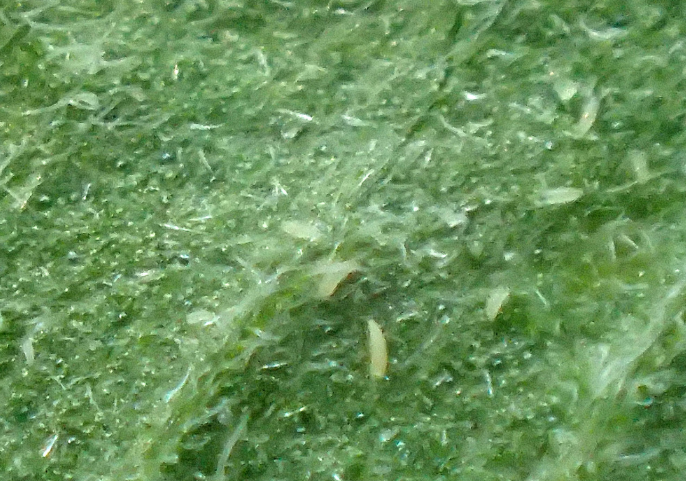
The Real Health Risks Haven’t Been Mold
If we look at what’s actually caused harm since legalisation, the record points elsewhere.
Emergency room visits, especially for edibles, have seen spikes—mostly tied to dosage misjudgment, accidental ingestion by children, or users unfamiliar with delayed onset. Psychosis links have been debated in high-THC consumption cases, especially among adolescents.
But mold? It doesn’t even make the top five risks.
Meanwhile, U.S. data shows cannabis-related health incidents tend to be behavioural or psychological, not microbial. A 2022 CDC analysis of cannabis-related ER visits among adults cited anxiety, palpitations, or hallucinations—not fungal contamination.
In short, we’ve seen the headlines about THC potency or teenage usage. Mold rarely even earns a footnote.
So Why Does Mold Get So Much Regulatory Attention?
That’s a fair question, and it’s one producers often ask behind closed doors.
Regulations in many states and provinces require products to pass microbial tests—standards often stricter than those used for some food items. That means whole batches can be trashed if they fail, even if no one is likely to suffer from the type or level of mold present.
Why?
-
Mold is visible and testable, which makes it easier for inspectors to flag.
-
Historical concerns about contaminated cannabis—especially for medical use—have left a cautious legacy.
-
Laws often err on the side of zero tolerance, even when risk is minimal.
But critics argue that the burden placed on growers and processors doesn’t always line up with real-world evidence.
“People aren’t ending up in hospital from a little bit of mold on flower,” said a cannabis quality assurance consultant who’s worked with Canadian LPs. “But the economic cost of a failed batch? That’s huge.”
A Public Health Perspective Rooted in Data
Let’s put things in a wider context.
Here’s a comparison of reported public health incidents tied to cannabis risks in legal markets:
| Health Concern | Severity | Data from 2018–2023 (Canada & U.S.) |
|---|---|---|
| Accidental child ingestion | High | Hundreds of ER visits annually |
| Psychosis in high-THC users | Medium to high | Ongoing research, some population links |
| Driving while intoxicated | High | Documented accidents, difficult to quantify risk |
| Edible overconsumption | Medium | Frequent cause of ER visits |
| Mold contamination | Low to negligible | Fewer than 5 adverse reactions, all non-serious |
That table says it all.
The biggest concerns with cannabis aren’t microbial—they’re behavioural and neurological. That doesn’t mean mold shouldn’t be monitored. It should. But pretending it’s a major health threat? That’s just not supported by the numbers.
Immunocompromised Individuals Still Deserve Protections
Now, it wouldn’t be fair to write off mold entirely. There are vulnerable groups who could suffer more serious consequences.
Patients undergoing chemotherapy, organ transplant recipients, or individuals with chronic lung conditions may be more sensitive to inhaled mold spores. That’s where medical-use safeguards, including product sterilisation (like gamma irradiation), come into play.
One sentence paragraph here.
But the blanket approach—treating all mold as if it’s deadly for everyone—might not be the most sensible route anymore.
Industry Impact: Testing Labs, Wasted Product, and Rising Costs
What’s the fallout of keeping mold testing strict, even when risks are low?
Producers face increased costs from lab testing fees, batch rejections, and recall fears. Some argue that over-regulation on this front creates more waste than it prevents harm.
Growers report losing thousands of pounds of product over trace levels of mold well below any threshold known to cause harm in healthy adults. In an industry already struggling with price compression, that’s a painful pill to swallow.
It also leads to inconsistency. Some jurisdictions permit certain mold types under defined limits; others adopt a zero-detection stance. The lack of harmonised standards means a product passing in one region might be trashed in another.
One licensed producer in Ontario said this: “We’ve lost over $300,000 in product in the last 18 months to failed microbial tests. Not a single consumer complaint. Not a single health report.”
Science Will Keep Evolving, But the Fear Shouldn’t Be Frozen in Time
Cannabis regulation has always played catch-up to science. That’s not unusual—it happened with alcohol, tobacco, even energy drinks.
But now that there’s enough real-world evidence, it’s time to ask tougher questions. Mold in cannabis is a quality issue, no doubt. But a public health crisis? There’s just no evidence.
And still, we keep hearing the same tired warnings.
There’s room for better, risk-based regulation—rules that protect vulnerable people without treating every trace of fungus as a death sentence. Until then, growers will keep tossing perfectly good product, and consumers will keep hearing half-truths about dangers that haven’t materialised.