
CANNABIS
California Strips the 10-Milligram Cap Off THC Drinks
Lawmakers dropped AB 2532’s 10mg package cap after operators showed it would erase 93.2% of legal THC drink sales, and sent Newsom a measuring-cup bill instead.

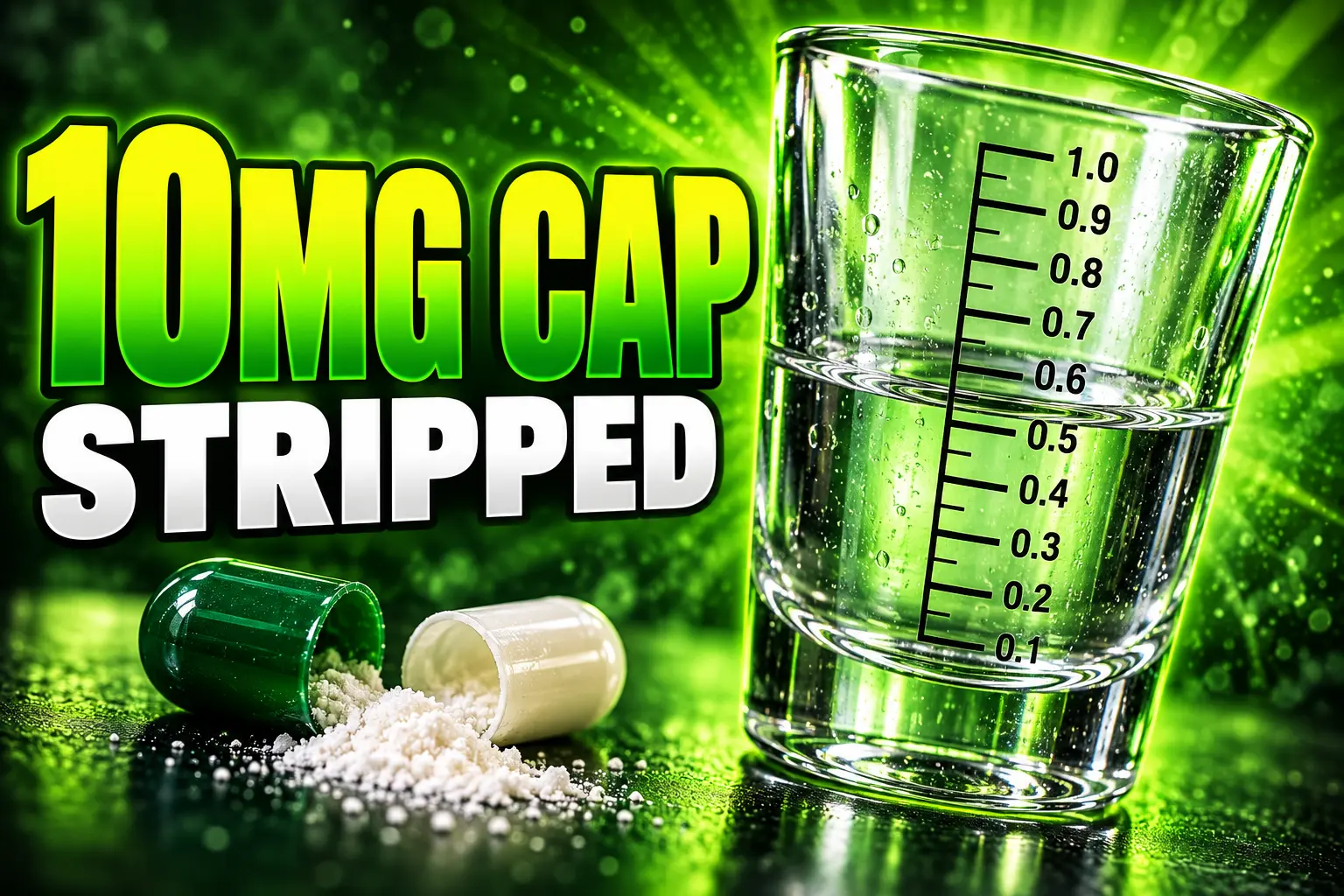
California lawmakers stripped a 10-milligram THC package cap out of AB 2532 after licensed drink makers showed it would erase 93.2% of legal cannabis beverage sales. The enrolled bill with Governor Gavin Newsom keeps 100-milligram cans on shop shelves and instead requires measuring cups, serving lines, and a ban on selling those drinks as if they were a single sip.
Assemblymember Jacqui Irwin, a Democrat from Thousand Oaks, introduced the cap on February 20, 2026. It never survived the first policy hearing. What remains is a two-thirds bill that still needs a signature, with the heavy lifting delayed until July 1, 2027.
The Package Cap Never Left Committee
Existing state law already caps edible cannabis at 10 milligrams of THC per serving. Irwin’s first draft went further. It would have barred any cannabis drink container from holding more than that amount, turning a 100-milligram can into an illegal product overnight.
That is the format adults actually buy. A standard serving is 10 milligrams. A 100-milligram can is ten servings in one vessel, closer to a bottle of wine than a shot. Irwin told the Assembly Business and Professions Committee on April 14 that those cans had no practical way for a customer to pour a single serving, and that the gap raised the risk of taking too much at once.
The same morning, she told the committee the bill would be amended. The package cap came out. The measuring rules stayed in. The next day, April 15, the amended text was in print. Floor votes later produced no noes: 71-0 in the Assembly on May 11, 40-0 in the Senate on August 27, and 74-0 when the Assembly took the Senate amendments that same day. The enrolled version was published September 1 and reached the governor at 4 p.m. on September 4.
$73.6 Million Sat Above the 10-Milligram Line
Eleven licensed operators and trade groups did not wait for the hearing. On April 7 they wrote Chair Marc Berman and the rest of the committee, copying Irwin, and asked them to kill the cap. Pabst Labs, Stiiizy, Kiva Brands, the California Cannabis Industry Association, and the California Cannabis Operators Association were among the names on the page.
Their math was blunt. Products over 10 milligrams made up 93.2% of dispensary drink sales. The 100-milligram format alone was $66 million, or 83.6% of the category. A hard cap, they wrote, would cut $73.6 million in yearly sales and leave $5.4 million. That is a $79 million aisle reduced to a niche.
WHERE THE SALES SAT
| Dose band | Share of drink sales | Annual retail |
|---|---|---|
| 100mg cans and bottles | 83.6% | $66 million |
| Other drinks over 10mg | 9.6% | $7.6 million |
| Drinks at or under 10mg | 6.8% | $5.4 million |
The same letter priced the tax hit as a coalition estimate of $11.9 million in state cannabis excise tax, $5.7 million in state sales tax, and $3.5 million in state income tax, about $21 million a year before local add-ons of 5% to 10% or more. California’s state-level break from federal 280E rules, AB 37, had expired on December 31, 2024, which is why they put income tax back in the stack.
They also said the legal market was shrinking around this one growth line. Total cannabis sales were down about 10% year over year, flower about 15%, while drinks were up about 6%. More than 75% of licensed storefronts already carried the category. A 10-milligram-only set, they argued, would not support the cold chain that keeps those products on the shelf.
Kids Poison Calls Climbed Fast After 2016
Irwin did not invent the child-safety brief. She had asked for a state audit of cannabis packaging. Grant Parks, the California State Auditor, published report 2024-105 on August 7, 2025. It found a 469 percent increase in poison-control calls about cannabis ingestion among children age five and younger, from 148 calls in 2016 to 842 in 2023.
THE AUDIT’S CHILD-EXPOSURE COUNTS
- Age 5 and under: Calls rose from 148 in 2016 to 842 in 2023, a 469% jump.
- Ages 6 to 19: Calls rose from 256 to 633 over the same years, a 147% jump.
- Emergency visits, 2023: 308 for children younger than 5, 99 for ages 5 to 9, and 328 for ages 10 to 14.
- Toxic dose: The report cites research that 1.7 mg of THC can be toxic to a child under 6.
The audit’s packaging sample is what put drinks in the crosshairs. Reviewers judged 23 of 40 products sold online as likely attractive to children, citing food images, bright type, and cartoon art. They wrote that some cannabis drinks can be particularly attractive to kids. They also found the Department of Cannabis Control inspected fewer than half of its licensees each year since 2022 and did not always raise penalties on repeat packaging violators.
WHERE THE POISON DATA SPLITS
- Irwin’s brief: Rising poison-control calls and emergency visits are not coming only from unlicensed shops, so licensed packaging and high-dose drinks belong in the fix.
- Operators’ brief: The steepest climb came after hemp was taken off the federal drug schedule in 2019, and licensed drinks do not show up as a child-harm category in FDA adverse-event files.
The letter cites five years of FDA CAERS filings with zero child adverse events tied to licensed cannabis drinks. That claim sits in the industry’s document, not in the auditor’s tables. The auditor never sorted poison calls by licensed drink versus gummy versus hemp gummy from a gas station. Lawmakers had to legislate inside that fog.
Why the Auditor Wanted a Cap and a Cup
At the April 14 hearing, Kristoffer Applegate walked the committee through those findings and put two foreign models on the table. He said the audit recommended easy serving tools, such as the measuring devices used in Washington, and a cap of 10 milligrams of THC per drink container, as in Canada. Irwin kept the first and dropped the second the same day.
As proposed to be amended today, AB 2532 will establish reasonable safeguards on the sale and marketing of cannabis beverages to ensure that consumers are provided products they can use responsibly.
Jacqui Irwin, Assemblymember, Assembly Business and Professions Committee, April 14, 2026
She told colleagues the amendments would let customers measure a single serving of THC and would force drinks with more than 10 milligrams to be labeled and marketed as multi-dose. That is the deal the rest of the session ratified.
HOW AB 2532 CHANGED SHAPE
- February 20, 2026: Irwin introduces a bill that would bar a cannabis drink container from holding more than 10 milligrams of THC and add the national Poison Help number to edible and drink labels.
- April 7, 2026: Eleven operators and trade groups file a formal oppose letter. The California Statewide Law Enforcement Association’s cannabis control agents file a separate oppose letter the same day, warning that cutting 100-milligram drinks would not cut demand.
- April 14, 2026: The committee hears the bill. Irwin announces the cap is coming out. The vote is 17-0, with 2 other, to pass it as amended to Appropriations.
- May 11, 2026: The Assembly sends the rewritten bill to the Senate, 71-0.
- August 27, 2026: The Senate passes it 40-0. The Assembly concurs 74-0. The enrolled text is presented to Newsom on September 4.
The pattern is familiar in Irwin’s file. An earlier bill, AB 762, started as a ban on all-in-one vapes. Operators fought, the vapes came out, and the rest of the bill moved. Drink makers ran the same play in six days in April and got the same kind of rewrite.
Licensed Drinks Have No Black-Market Twin
The wager in the April 7 letter was not that kids should have less protection. It was that a 10-milligram can would not be the product on the shelf. Adults who want 100 milligrams would still want 100 milligrams. If licensed shops could not sell it, someone else would.
Flower already leaks. The signatories wrote that more than half of the cannabis flower used in California is bought outside licensed shops. Drinks, they said, do not leak that way. They need commercial mixing, a cold chain, and a licensed counter. There is no garage version that looks like a seltzer and lasts on a warm shelf.
Law enforcement agents who work cannabis control made the same point in their own April 7 letter. Pulling 100-milligram drinks from licensed shops, they wrote, would not erase demand. It would push buyers back to untested products and shrink the Cannabis Tax Fund that pays for those agents. In a market where illicit flower already outruns the legal aisle, they called the cap a step in the wrong direction.
That is why a child-safety bill aimed at the one ingestible with a claimed clean FDA child record was such a hard sell once the sales mix was on the table. Gummies can be bagged in a spare room. A 100-milligram canned drink cannot.
The Hemp Door AB 8 Already Opened
The timing made the cap even harder to defend. On October 2, 2025, Newsom signed Assembly Bill 8 by Majority Leader Cecilia Aguiar-Curry. The Department of Cannabis Control now limits the sale of intoxicating hemp products and is folding most of that trade into the cannabis rulebook. Aguiar-Curry’s office said products with THC must be sold exclusively through licensed cannabis dispensaries.
As of January 1, 2026, industrial hemp extract used in food, drinks, or supplements cannot contain THC or synthetic cannabinoids. It has to be CBD or CBN isolate at more than 99% purity. Full licensing of hemp extraction under the cannabis department is set for January 1, 2028. The point of that design was to drag THC seltzers out of gas stations and into the same shops that sell 100-milligram cannabis cans.
The April letter called the collision by name. The state had just told THC hemp drinks to enter the licensed beverage aisle. A 10-milligram package cap would have shut that aisle for the dose people already buy. Mandatory counter talks, THC labels, and serving-size lines, the writers said, were already in place for anyone switching from a low-dose hemp can to a stronger cannabis can.
Newsom’s 2024 emergency hemp rules, and the inspection wave that followed, were built on the same youth-access brief Irwin used. The difference is the channel. AB 8 pushed THC drinks toward licensed shops. AB 2532, in its first form, would have made those shops unable to sell the dose that pays for the cooler.
Measuring Cups and Serving Lines Start in 2027
If Newsom signs the enrolled bill, the 100-milligram can stays legal. The 10-milligram-per-serving rule for edibles stays as well. What changes is how a multi-serve drink has to look, read, and get handed across the counter. Most of those duties begin July 1, 2027.
WHAT THE ENROLLED BILL REQUIRES
- Poison Help number: Every edible and cannabis drink label and insert must carry the toll-free national Poison Help line.
- Multi-serve notice: A drink with more than one serving must, in print, tell the buyer it has multiple servings, state one serving in fluid ounces to the nearest tenth, and explain how to measure that pour.
- Lines on clear bottles: If the container is transparent or otherwise shows the liquid left, it must carry unobstructed lines for each serving, unless the shape makes accurate lines impossible.
- A cup at the register: For any multi-serve cannabis drink, the retailer must offer a free measuring device at purchase. The maker supplies it as needed. It must hold at least one fluid ounce and measure to the nearest tenth of an ounce.
- No single-serve pitch: Starting the same date, no one in the trade, licensed or not, may advertise a multi-serve cannabis drink as a single-serve product or push drinking several servings at once.
Those rules track the alternatives the April 7 letter already said it could live with: clearer dose type, multi-dose warnings, a ban on casual single-serve language, and tools for portioning. The statewide education campaign the signatories wanted is not in the enrolled text. Child-resistant, resealable, tamper-evident packaging was already required for multi-serve cannabis goods.
Clear or colored drink containers remain allowed. The bill still declares that it furthers Proposition 64, which is why it needed a two-thirds vote. On the floor, that was not close.
The 100-milligram can is still the product that pays for the category. The enrolled bill does not take it off the shelf. It puts a cup next to it, prints the pour in tenths of an ounce, and tells marketers to stop calling a ten-serve drink a single round. Newsom has that text. The cans stay legal unless he rejects it.

Vireo Bets $20 Million on Six Unopened Pennsylvania Stores

Alabama’s First Medical Cannabis Sale Left Three Shops

Medical Cannabis 280E Relief Stops at the 2026 Tax Year

The Water Still Leaves Trulieve’s Jefferson County Farm

Judge Undoes OMMA’s Public-Safety Shutdown of Cedric Gardens

A Virginia Checkbook Put Question 8 on the Ballot

LiUNA’s Half-Cent Buyout of Entourage Ended in CCAA
Medical Cannabis 280E Relief Stops at the 2026 Tax Year

Breez Tablets Fill California Towns That Banned Shops

iAnthus Booked $6.294 Million for the Cheetah Vape Brand
-
 MARIJUANA11 months ago
A Virginia Checkbook Put Question 8 on the Ballot
-
 CANNABIS2 years ago
LiUNA’s Half-Cent Buyout of Entourage Ended in CCAA
-
 CANNABIS6 months ago
Medical Cannabis 280E Relief Stops at the 2026 Tax Year
-
 CANNABIS2 years ago
Breez Tablets Fill California Towns That Banned Shops
-
 CANNABIS2 years ago
iAnthus Booked $6.294 Million for the Cheetah Vape Brand
-
 CANNABIS5 months ago
Alabama’s First Medical Cannabis Sale Left Three Shops
-
 HEMP2 years ago
Wana’s Total Wine Bet Meets a 0.4 mg Cap
-

 CANNABIS2 years ago
The $76 Million People’s Deal Ends in a $400,000 Settlement