
MARIJUANA
A Virginia Checkbook Put Question 8 on the Ballot
Question 8 would close Massachusetts recreational marijuana shops in 2028 after one Virginia nonprofit paid to place the repeal on the November 3 ballot.

Massachusetts voters will decide Question 8 on November 3, a measure that would close licensed recreational marijuana shops while leaving medical sales and limited personal possession in place. The Coalition for a Healthy Massachusetts got it on the ballot with nearly $3.2 million from one Virginia nonprofit, SAM Action Inc., after paid circulators cleared the last signature cut by 122 names.
If it passes, licensed adult-use sales would end on January 1, 2028. No state has yet voted to dismantle a licensed, taxed recreational market that voters themselves created.
One Out-of-State Donor Paid for the Ballot Slot
The ballot committee presents itself as a statewide mix of parents, clinicians, and cops. Office of Campaign and Political Finance records show a much thinner roster. SAM Action, the 501(c)(4) arm of Smart Approaches to Marijuana, sent $1.55 million in late 2025 and another $1.63 million through August 2026. Three people added $600. SAM Action does not have to name its own donors.
Kevin Sabet, president of Smart Approaches to Marijuana, had already previewed the spend. In a video he said the group was putting “multimillion-dollar led support” behind campaigns “to end marijuana sales and commercialization in Maine and Massachusetts.” Maine missed its 2026 signature deadline and is aimed at 2027. Massachusetts is the first state to vote.
Wendy Wakeman, a North Andover Republican operative who chairs the coalition and speaks for it, has cast the fight as parents against “Big Marijuana.” At a March State House hearing she said she was the spokesperson, not the treasurer, and that she takes a $1,500 monthly stipend paid from SAM funds. The original petitioner sits on the Massachusetts Republican State Committee from Middlesex County. The money, and the petition vendor, did not.
WHERE THE $3.2 MILLION WENT
- First-round petitions: About $1.4 million went to GroundGame Political Solutions, a Jefferson City, Missouri, firm, to clear the December 2025 threshold.
- Second-round petitions: Another $413,000 went to the same vendor for the July 2026 round, bringing signature costs above $1.8 million.
- 2026 consultants: From January through August the committee spent about $750,000, mostly on media and strategy.
- Cash on hand: Filings dated September 4 showed $980,000 still available for the stretch to November 3.
Rep. Michael Day, a Stoneham Democrat, asked Wakeman at that March hearing whether the effort would have reached the ballot without paid gatherers. She said the committee’s strategy was to use them, and that they took in just shy of 100,000 names. GroundGame had already been in the news in Rhode Island, where the firm said it fired a worker who wrote dead people’s names on nomination papers. Massachusetts hired the same shop anyway.
What Question 8 Would Shut Down in 2028
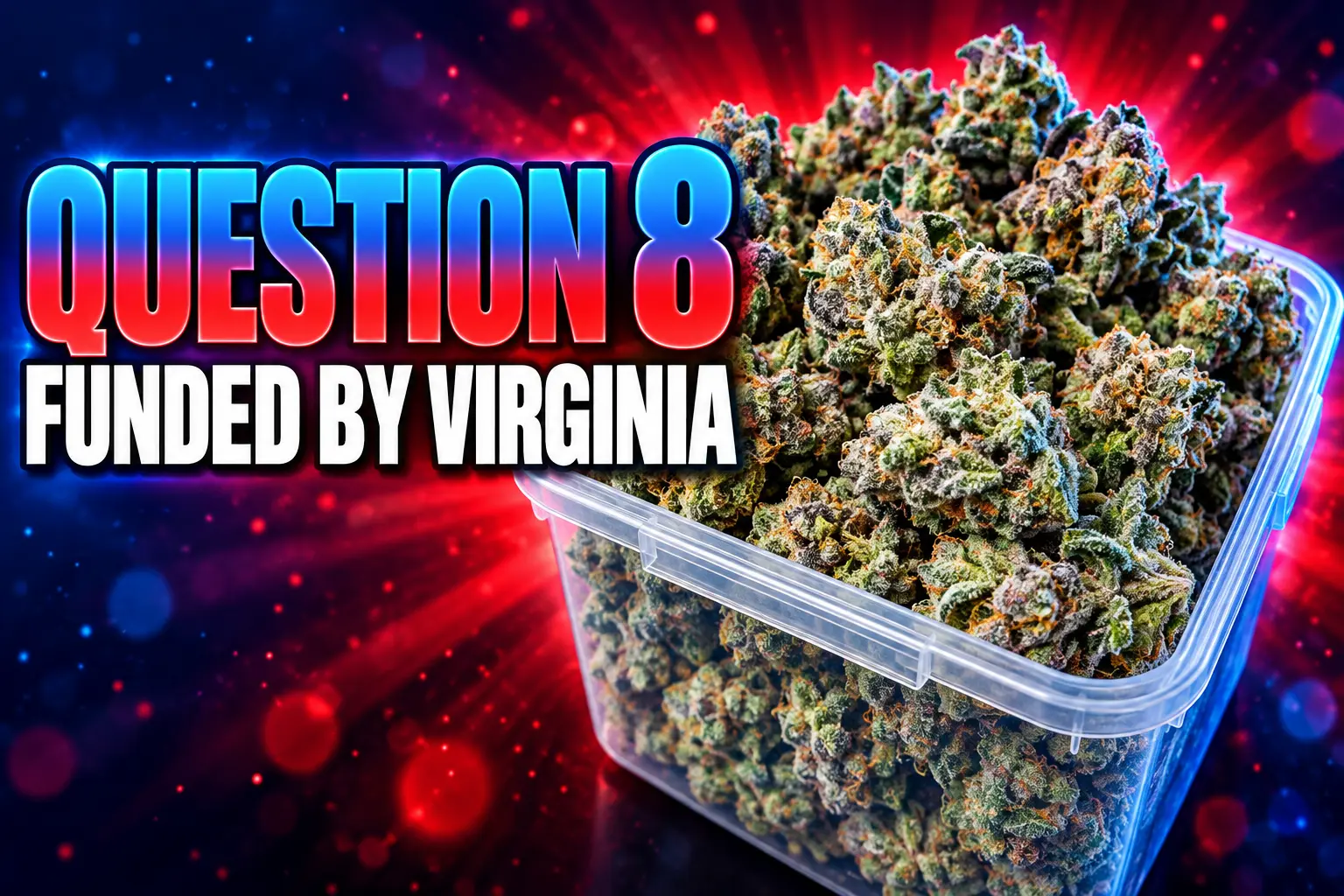
The proposal is titled “An Act to Restore a Sensible Marijuana Policy.” On the ballot it runs as “Prohibit Retail Sale of Adult Recreational Use Marijuana.” The Supreme Judicial Court, in Pineau v. Attorney General on June 12, described the mechanism in plain terms. The act repeals Chapter 94G, which licenses adult-use businesses, and Chapter 64N, which taxes them. Medical marijuana under Chapter 94I stays. The Cannabis Control Commission would keep going, with its remaining authority shifted onto the medical program.
Adults 21 and older would face no civil or criminal penalty for possessing one ounce or less, with no more than five grams of that as concentrate. Possession of more than one ounce and up to two ounces would be a $100 civil fine plus forfeiture. Over two ounces, existing criminal law would apply again, including a possible six-month house-of-correction term and a $500 fine. Recreational home grow, now six plants per adult and twelve per household, would end. Gifting would shrink to one ounce.
On April 19, Governor Maura Healey signed a law that had just raised the adult possession cap from one ounce to two. Question 8 would walk that cap back. Licensees would get an expedited path to medical licensure, or a window to sell leftover adult-use stock to medical treatment centers, before the January 1, 2028 cutoff. Repealing Chapter 94G would also wipe out the Cannabis Social Equity Trust Fund and the host-community agreement statute that towns now use to bargain with shops.
The full text is Initiative Petition 25-10 as filed, the milder of two drafts sent to Attorney General Andrea Campbell. The harsher draft would have capped THC in the surviving medical program. Backers moved the softer one, and Campbell certified it on September 3, 2025.
ADULT-USE RULES NOW AND UNDER QUESTION 8
| Rule | Current law | If Question 8 passes |
|---|---|---|
| Licensed recreational sales | Legal, 388 active retailers as of July 2025 | End January 1, 2028 |
| Possession, age 21+ | Two ounces in public; ten ounces at home | One ounce, no more than five grams concentrate |
| Home cultivation | Six plants per adult, twelve per household | Eliminated |
| One to two ounces | Within the legal possession cap | $100 civil fine and forfeiture |
| Medical program | Operating, 93 treatment centers as of July 2025 | Continues under Chapter 94I |
| Adult-use excise tax | Chapter 64N, 10.75% state excise | Repealed |
Day put the operational hole to Wakeman in one sentence: “Are we not setting up a black market with this question?” She called it a great question, then said that was not how she looked at it. Demand does not move because a license dies. It moves to whoever still sells.
Paid Circulators Cleared a 122-Signature Margin
Massachusetts makes ballot committees do the work twice. After the first round, lawmakers get a chance to enact the proposal. If they refuse, sponsors must collect a smaller second batch. The Coalition cleared both cuts, the second one by 122 names, and then survived two formal objections and a run at the state’s highest court.
Voters and shop owners spent months arguing that circulators pitched the clipboards as affordable housing, park money, voter ID, or a fentanyl crackdown. David O’Brien, president of the Massachusetts Cannabis Business Association, called the drive “organized voter fraud” and said collectors were “lying to people to get them to sign it.” The Secretary of the Commonwealth’s office said it had received complaints from people who signed without reading. Wakeman called the charges baseless and said people should read before they sign.
I think the person who signed the piece paper without knowing what it was really has to answer for their own ability to function in society, don’t you?
Wendy Wakeman, spokesperson, Coalition for a Healthy Massachusetts
The State Ballot Law Commission did not treat those stories as proof. On January 22 it dismissed the first objection, writing that the fraud claim “rings hollow given that absolutely no admissible evidence has been presented or offered.” A later objection from Kevin Gilnack of Equitable Opportunities Now needed to knock out at least 123 of the second-round names. On July 21 the commission said he had not met that burden and ordered Secretary William Galvin to print the question.
HOW QUESTION 8 REACHED THE BALLOT
- August 7, 2025: Petitioners file Initiative Petition 25-10 with the attorney general, in two versions, on the statutory deadline.
- September 3, 2025: Attorney General Andrea Campbell certifies the milder draft and issues a summary for petition sheets.
- December 18, 2025: The Elections Division allows 78,301 first-round signatures against a 74,574 threshold, from 79,420 submitted.
- January 22, 2026: The State Ballot Law Commission throws out the first signature objection for lack of admissible evidence.
- May 5, 2026: The legislature’s deadline to enact any of the nine pending initiatives passes with no action, reopening a second signature round.
- June 12, 2026: The Supreme Judicial Court upholds the certification and the attorney general’s summary in Pineau v. Attorney General.
- July 9, 2026: Michelle K. Tassinari of the Elections Division allows 12,551 of 12,889 second-round signatures; 12,429 were required.
- July 21, 2026: The Ballot Law Commission overrules the second objection and orders Question 8 onto the November 3 ballot.
Tassinari’s letter was the whole ballgame in one paragraph: 12,551 certified signatures of the 12,889 received by July 1 “have been allowed,” and “the initiative petition will be printed on the November 3, 2026, state election ballot as required by the Constitution.” The fraud fight made noise. It did not move the number.
Adult-Use Stores Hit $10 Billion Ahead of the Vote
The market those 122 names put at risk is no longer a startup. Adult-use shops grossed $1.65 billion in 2025, a new calendar record, across 46.3 million transactions. They crossed $9 billion in all-time gross sales on February 4, then $10 billion on September 5. The first two stores opened in November 2018.
Chris Harding, chair of the Cannabis Control Commission, called the sector “an integral part of our economy, counting hundreds of businesses of all sizes and employing nearly 15,000 people.” Adult-use flower and products carry a 6.25% state sales tax and a 10.75% excise. Cities and towns may add a local option of up to 3%. The Department of Revenue booked about $280 million in cannabis sales and excise taxes in fiscal 2025 and about $336 million in fiscal 2026. The Commission puts state and local cannabis taxes since 2016 at $2 billion, including $43 million in local option taxes in fiscal 2026.
THE MARKET QUESTION 8 WOULD UNWIND
- All-time sales: Adult-use shops crossed $10 billion in gross sales on September 5, 2026.
- Jobs: Commission Chair Chris Harding puts employment at nearly 15,000 people.
- Shops: 388 adult-use retailers were active as of July 2025, beside 93 medical treatment centers.
- Tax take: The Department of Revenue recorded about $336 million in cannabis sales, local, and excise taxes in fiscal 2026.
Jason Reposa, who founded the licensed manufacturer Good Feels, has been blunter than the trade groups. “If repeal passes, my company doesn’t exist,” he said. Ryan Dominguez, chair of Stop the Repeal and a Massachusetts Cannabis Coalition officer, told operators in June that the threat was real after months in which many shops treated the petition as a nuisance. The defense spent the winter in court. When the last objection failed in July, fifteen weeks remained to the vote.
Industry committees had raised about $1.54 million through August, including six-figure checks from Insa, the Retailers Association of Massachusetts, and Ascend Wellness Holdings. That is less than half the SAM total. New England’s largest chamber of commerce joined the no campaign in late September, a sign the fight has moved out of the dispensary back rooms and into the broader business lobby. Hemp storefronts that sell intoxicating cannabinoids outside the adult-use system are the quiet party with a different interest: if licensed marijuana retail dies, they keep the unlicensed shelf.
Ohio Crash Data Is Carrying the Yes Campaign
The Coalition’s public case is health and roads, not accounting. Its site asks voters to keep possession legal and close the shops, and it leads with impaired driving. One featured figure is a 42% THC-positive rate among drivers killed in crashes. That number is real, and it is not from Massachusetts.
Researchers at Wright State University reviewed coroner files on 246 deceased drivers in Montgomery County, Ohio, from January 2019 through September 2024. They found 41.9% of deceased drivers tested positive for active THC, 103 of 246, at an average of 30.7 ng/mL. Ohio legalized recreational cannabis in 2023, in the middle of the window. The positive rate was 42.1% before legalization and 45.2% after, a gap the authors said was not significant. Lead author Akpofure P. Ekeh said people should treat smoking cannabis like alcohol: don’t smoke and drive. The study does not measure Massachusetts roads, and it does not show that shutting licensed shops lowers crash deaths.
Wakeman has also argued that legalization failed on its own terms. “One of the things we were sold when voting to accept looser cannabis rules was that the black market would go away, and that just hasn’t happened,” she said. “The black market is still thriving.” On youth, the campaign quotes Dr. Cheryl Foo, a Mass General Brigham psychologist, warning that commercialization hits teenagers with mental health challenges especially hard. Those are the ads now running. The official committee account posted one on September 24 that said 53% of cannabis users who drive get behind the wheel within an hour, and that Question 8 “shuts down recreational pot shops.”
53% of cannabis users who drive get behind the wheel within an hour. That's slower reactions, worse judgment, and less coordination on the road next to you. Question 8 shuts down recreational pot shops.
Medical marijuana and personal possession stay legal. Vote YES on Question 8… pic.twitter.com/hsW3RJHhss
— Coalition for a Healthy Massachusetts (@HealthierMA) September 24, 2026
Roadside smell and teenagers are the arguments that still land once the clipboard fight is over. Parents in public threads say they vote yes because the odor is in traffic and the product is in kids’ hands. Closing a licensed counter does not, by itself, stop either one. It does move the remaining trade off the tax roll and out of the testing lab.
Repeal Trails 55-33 While SAM Still Outspends
A University of Massachusetts Amherst/WCVB survey of 800 registered voters, fielded August 5 to 12 with a margin of error of plus or minus 4.4 points, found 55% against repeal and 33% for it. Forty percent said they would definitely vote no; 15% would probably vote no. Fifteen percent would definitely vote yes; 18% would probably vote yes. Ten percent were undecided. Three percent said they did not understand the question. Tatishe Nteta, the poll’s director, noted that Trump voters (48%) and Republicans (45%) were the only groups approaching majority support, and that no demographic broke 50% yes.
A February University of New Hampshire survey had put opposition at 63%. That was a different poll with different wording, so the eight-point gap is not a clean drop. It is still the direction the yes campaign needs. Nteta said one in ten voters remained undecided and that there was time for the tables to turn. He also said convincing Massachusetts to reverse course “appears to be a formidable challenge.”
The 2016 electorate is the other baseline. Question 4 won 1,769,328 votes to legalize in 2016, against 1,528,219 no, or 53.7% to 46.3%. That was a new market on a presidential ballot. This is a living one on a midterm ballot, with nine statewide questions and a title that reads as a prohibition, so that a yes vote closes the shops. Casual voters who skip the fine print can mark the opposite of what they mean. The 3% who told UMass they did not understand the question are the warning on that.
SAM still has the louder budget. The Coalition had $980,000 in the bank as of September 4, plus whatever else the Virginia account sends. Licensed operators, who built the $10 billion in sales and the tax stream that now pays for treatment, transit, and town budgets, started later and smaller. The shops will be open on November 3. The vote decides whether they are still allowed to be open on January 1, 2028.
Disclaimer: This article is news reporting on a pending Massachusetts ballot question and is for information only. It is not legal advice, tax advice, or a recommendation on how to vote. Readers who need guidance on cannabis licensing, possession rules, or election procedures should consult a Massachusetts attorney or local election official. Figures and campaign totals reflect public filings and agency data available as of the dates named in the story and may change before November 3, 2026.

Vireo Bets $20 Million on Six Unopened Pennsylvania Stores

Alabama’s First Medical Cannabis Sale Left Three Shops

Medical Cannabis 280E Relief Stops at the 2026 Tax Year

The Water Still Leaves Trulieve’s Jefferson County Farm

Judge Undoes OMMA’s Public-Safety Shutdown of Cedric Gardens
Medical Cannabis 280E Relief Stops at the 2026 Tax Year

A Virginia Checkbook Put Question 8 on the Ballot

LiUNA’s Half-Cent Buyout of Entourage Ended in CCAA

Breez Tablets Fill California Towns That Banned Shops

iAnthus Booked $6.294 Million for the Cheetah Vape Brand
-
 CANNABIS6 months ago
Medical Cannabis 280E Relief Stops at the 2026 Tax Year
-
 CANNABIS2 years ago
LiUNA’s Half-Cent Buyout of Entourage Ended in CCAA
-
 CANNABIS2 years ago
Breez Tablets Fill California Towns That Banned Shops
-
 CANNABIS2 years ago
iAnthus Booked $6.294 Million for the Cheetah Vape Brand
-
 CANNABIS5 months ago
Alabama’s First Medical Cannabis Sale Left Three Shops
-

 HEMP2 years ago
Wana’s Total Wine Bet Meets a 0.4 mg Cap
-
 CANNABIS7 months ago
Missouri Put Metrc Out to Bid and Kept Using It
-

 CANNABIS2 years ago
The $76 Million People’s Deal Ends in a $400,000 Settlement